Καλωσορίσατε στο ιστολόγιο της Βιβλιοθήκης του Πανεπιστημίου Κύπρου
Scripta Πτερόεντα;
Ναι.
scripta πτερόεντα.
Επειδή στο ψηφιακό, διαδικτυακό περιβάλλον δεν ισχύει scripta manent, verba volant.
Εδώ, τα γραπτά (scripta) δεν μένουν απλώς, πετούν, καθίστανται πτερόεντα και τα έπεα manent (μένουν) ... ψηφιακά και προσβάσιμα.
Συμφωνία στρατηγικής συνεργασίας για τη διάθεση ενός νέου προϊόντος και αποκλειστικών υπηρεσιών σε Κινέζους αναγνώστες υπέγραψαν την Τρίτη η αμερικανική εταιρεία Amazon και η κινεζική Migu, θυγατρική της εταιρείας κινητής τηλεφωνίας China Mobile (CMCC-Migu).
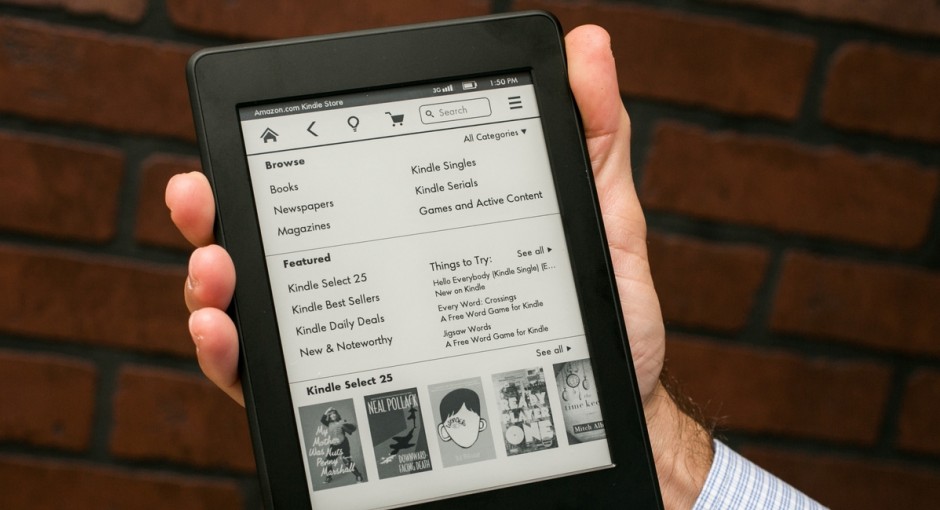
Με βάση τη συμφωνία, η Amazon και η CMCC-Migu θα προσφέρουν μία εντελώς νέα συσκευή ηλεκτρονικής ανάγνωσης βιβλίων (kindle) – την Kindle X Migu E-reader – που είναι η πρώτη τέτοια συσκευή που έχει λανσάρει η Amazon με άλλη εταιρεία. Η συσκευή αυτή συνδυάζει περισσότερα από 460.000 ηλεκτρονικά βιβλία από το στοκ ηλεκτρονικών βιβλίων της Amazon και πάνω από 400.000 ηλεκτρονικά λογοτεχνικά βιβλία της Migu.
«Οι Κινέζοι διαβάζουν περισσότερο από ποτέ και θα διαβάζουν στο μέλλον ακόμη περισσότερο», δήλωσε ο ανώτερος αντιπρόεδρος της Amazon Devices, Ντέιβιντ Λιμπ, προσθέτοντας ότι πολλοί πελάτες στην Κίνα θέλουν να έχουν την ευελιξία να διαβάζουν όσο θέλουν από μία ποικιλία ειδών και συγγραφέων».
Ο Λιμπ είπε ότι οι δύο εταιρείες συνεργάσθηκαν πολύ στενά για να προσφέρουν στους Κινέζους πελάτες μία αναγνωστική εμπειρία που συνδυάζει τα καλύτερα βιβλία και την ηλεκτρονική λογοτεχνία.
Η Κίνα έχει γίνει η μεγαλύτερη αγορά για συσκευές kindle, σύμφωνα με την Ελέιν Τσανγκ, πρόεδρο της Amazon China. Περισσότερα από 460.000 βιβλία, περιλαμβανομένων 220.000 κινεζικών και 240.000 αγγλικών, είναι διαθέσιμα στο στοκ των ηλεκτρονικών βιβλίων στην Κίνα.
Η Σα Γιουέτζια, εκτελεστική αντιπρόεδρος της CMCC, δήλωσε ότι η αγορά ψηφιακών βιβλίων στην Κίνα ανήλθε το 2016 στα 12 δισ. γιουάν (1,76 δισ. δολάρια), αυξημένη κατά 25% σε σχέση με το 2015, και ότι αναμένεται να αυξηθεί πάνω από 20% το 2017.
Σύμφωνα με έρευνα της Amazon China σε πάνω από 10.000 Κινέζους, που δημοσιοποιήθηκε τον Απρίλιο, το 56% των ερωτηθέντων διάβασε πάνω από 10 βιβλία το 2016 και το 82% διέθεσε τουλάχιστον μισή ώρα τη ημέρα στο διάβασμά τους.
Η CMCC – Migu είναι μία από τις μεγαλύτερες κινεζικές πλατφόρμες ηλεκτρονικής ανάγνωσης, με 160 εκατομμύρια ενεργούς αναγνώστες τον μήνα.
Are you thinking of ways to repurpose your Android tablet or phone into an ebook reader? Here’s your guide to it and some of the best ebook apps to get free ebooks online right now.
Since the dawn of time, mankind has thrived to communicate with one another, which put forward the concept of spoken and written language. As we have ushered into the modern age of communication where language is rather spoken and heard than written, there are plenty of bibliophiles around to keep writers in business around the world.
With the advent of computers and smartphones, the traditional ink and paper are slowly being evolved into ebooks. Being an economical and massively environment-friendly, an ebook reader is the ideal companion for the modern book lover. Services like Amazon Kindle books and ebook readers enable you to enjoy a distraction-free reading experience and carrying an entire library around.
But why spend hundreds of dollars on a device that can only be used for one purpose, when you can turn your Android tablet or phone into a proper ebook reader?
Why choose Android over any ebook reader?
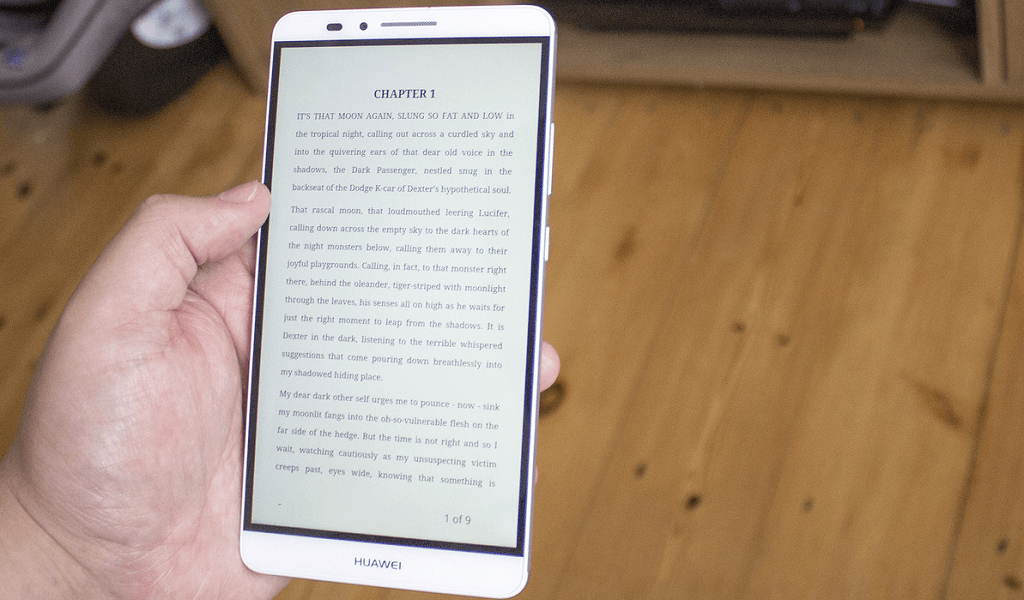
If you have researched enough about Amazon Kindle books online, you’ll find out how desperately Kindle Fire users try to get the Google Play Store on their devices. This is because most ebook readers are designed to be only just that, whereas as Android device can essentially become anything and everything you want it to be.
Admittedly, the e-ink technology used by certain Amazon Kindle readers enables its battery life to last for days at a stretch. But the cheaper models do not come with backlight illumination, which makes them unreadable in the dark so an Android device that you probably have lying around the house isn’t an unfair trade.
How to turn Android into ebook reader
It’s no secret that the Google Play Store is packed with resources to get free ebooks online and some of the best ebook reader apps. But before we jump into the free apps and sources for ebooks, let’s discuss some of the ways that you can turn your good old Android phone or tablet into an ideal ebook reader device.
Tweak the display for comfortable reading
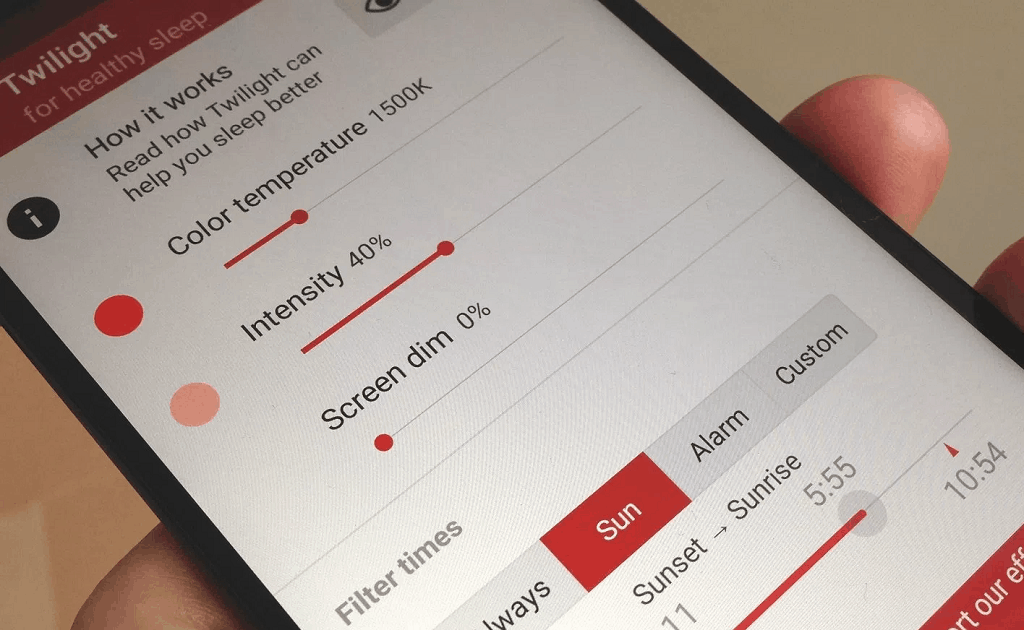
One significant issue that many readers complain about is the fact that how the screen of smartphones and tablets are too harsh for night reading. It has been scientifically proven that blue light exposure to the eyes in the later hours of the evening does not only harm the eyes but also affects the brain chemistry. While lowering the brightness helps reduce the strain, you need the Twilight app to help you configure your Android display for night reading.
By reducing the flux of the blue light from being emitted by your device screen, Twilight helps the photoreceptors adjust the soothing tone of red and yellow. While you can adjust the frequency of the blue light filter manually, the app is built with the ability to sync to your location and manage the light filter according to the time of the day. This app will not only help you read to your heart’s desire at night but ensure that you sleep like a baby after that as well.
Get extra hours of reading time with power saving
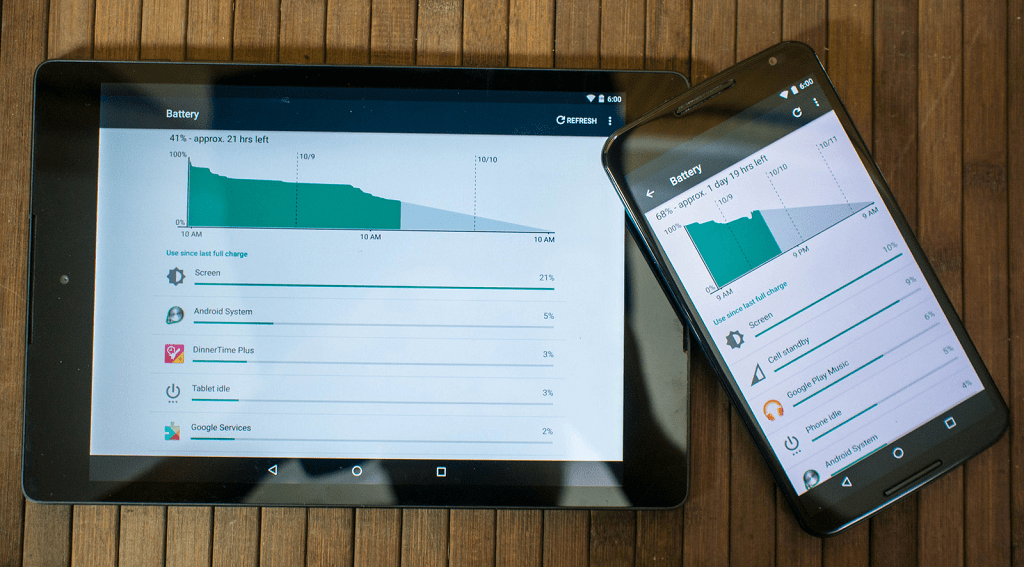
The only reason you’d find the avid readers flocking to an e-ink ebook reader is their battery life, which Android cannot compete with. However, you might be able to get a whole lot more screen-on time from your Android device or tablet if you plan to use it exclusively for reading. By bidding farewell to the power-hungry and data-hungry apps and services, you can directly reduce the workload on the processor.
Disabling the connectivity of Mobile Data, Bluetooth, and Wi-Fi (Airplane Mode) when not in use can help you curb additional battery usage and get you hours of screen-on time. Regardless of whether you plan to turn a spare Android into an ebook reader or use your daily driver for reading, there are plenty of ways to get more battery life out of your Android.
Reading on Google Chrome made simpler
If most of the reading you do online does not include an ebook, then Android is probably the only ebook reader that you can make use of. Whether you’re going through your favorite news media website or browsing through some online stories, their readability can be godawful with all the pestering ads and unnecessary graphics.
For every news reader who uses the Google Chrome browser for their daily reading, you don’t have to switch your browser for better readability. Thanks to a golden nugget hidden within the secretive Chrome Flags menu, you can enable the reader mode. Once enabled, reader mode will get rid of the useless junk from the web page and give you nothing but context-based viewing.
Best Android ebook apps to get free ebooks online
Since ebook readers are built for a singular purpose, they are packed with features that an everyday reader would need. From a formulated library of content and features for annotations to bookmarking and easy readability, all of these and more make up a good ebook reader. Moreover, the ability to get free ebooks online is always a welcome addition to any ebook app.
Fortunately, you need nothing more than a decent ebook reader app from the Google Play Store to bring all these features to Android. From college books and biographies to comic books and short stories, these ebook apps for Android will enable you to read anything and everything to your heart’s desires.
Best ebook reader apps
Aldiko Book Reader
For those of you who are looking for a virtual library that can manage their downloaded EPUB(iBooks) and PDF ebooks the best way possible, Aldiko Book Reader is a great choice to start with. More than just an ebook organizer, Aldiko Book Reader allows you to personalize your reading experience with a slew of amazing features and a user-friendly interface for navigation through the texts.
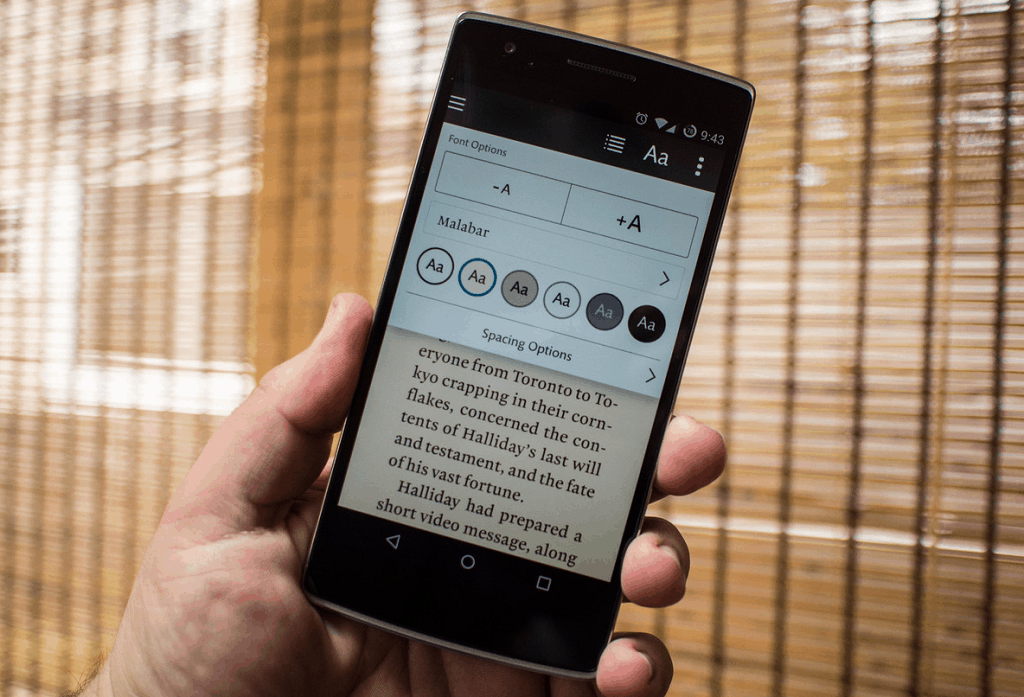
From changing the font size and type of the text to controlling the brightness of the screen for comfortable viewing, Aldiko is the whole package. While the free version is more than enough to keep you happy, Aldiko Book Reader Premium comes with features like book cover editing, annotations import/export, intuitive home widget and a completely add-free experience.
Moon+ Reader
A relatively new entry into the scene of ebook reader for Android, Moon+ Reader has quickly become a user favorite. Built with a simplified navigation menu and the ability to support more than a dozen different textual file formats, Moon+ Reader has more than what meets the eye. With a suite of text customization options and built-in day and night viewing mode, this ebook reader helps you set a personalized tone to your digital library.
With multiple auto-scroll modes to make navigation simpler than ever, more than a dozen gestures to control your reading tools and beautiful effects and animations that are aesthetically pleasing, there is no nothing that the Moon+ Reader app cannot do to give you a tailored reading experience on Android.
eReader Prestigio: Book Reader
Statistically speaking, an avid bibliophile is able to write and speak more than just one language, which makes a multilingual ebook reader an absolute necessity for many. eReader Prestigio fills in this role with its material design that compliments your Android device perfectly, along with a far-reaching support for several ebook file formats.
The app comes with multiple shelf themes to stock up your virtual library with, a built-in dictionary to help you learn while you read, and text-to-speech that makes any ebook an audiobook right away. Moreover, eReader Prestigio comes with multi-platform syncing support which makes it infinitely easier to import and export content from the internal storage as well as any of the popular cloud storage services.
Best ebook apps to get free ebooks online
Amazon Kindle
Jeff Bezos started off selling books on Amazon and the e-commerce website has come a long way, all while keeping its roots intact. There’s YouTube for videos, Spotify for music, and Amazon Kindle for ebooks, with millions of ebooks available for you at your fingertips. While you get a massive number of famous publishers free with the paid Amazon Prime membership, there is no shortage of free ebooks either.
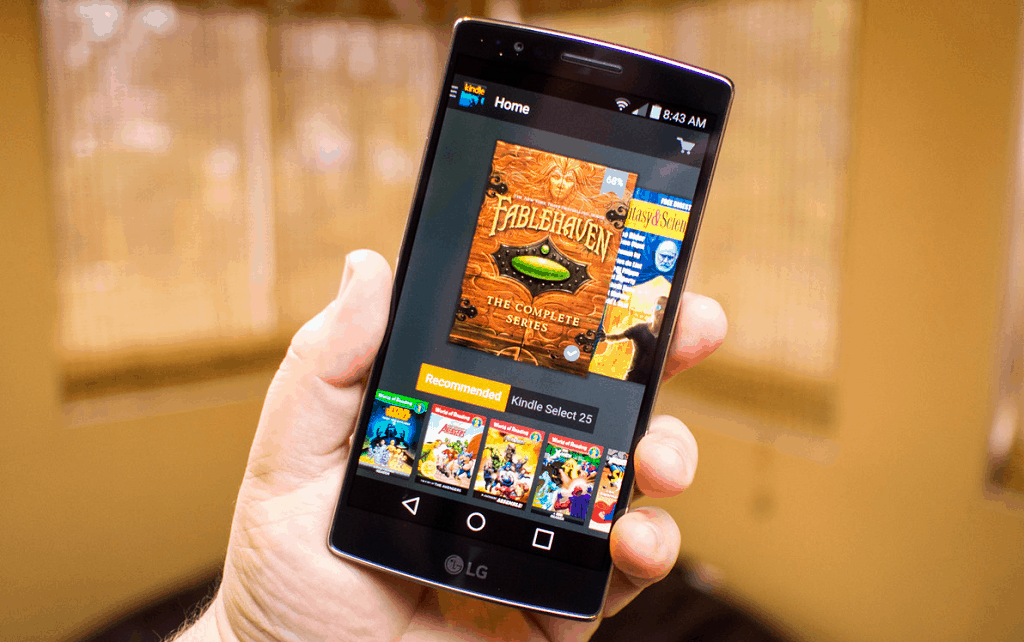
Apart from the super store for both paid and free ebooks of all genres, Amazon Kindle app for Android is a comprehensive ebook reader in itself. From trying out a sample of the ebook before you pay for it, or syncing your entire ebook library across different platforms, Amazon Kindle is, and will continue to be the best premium ebook app with thousands of free offerings as well.
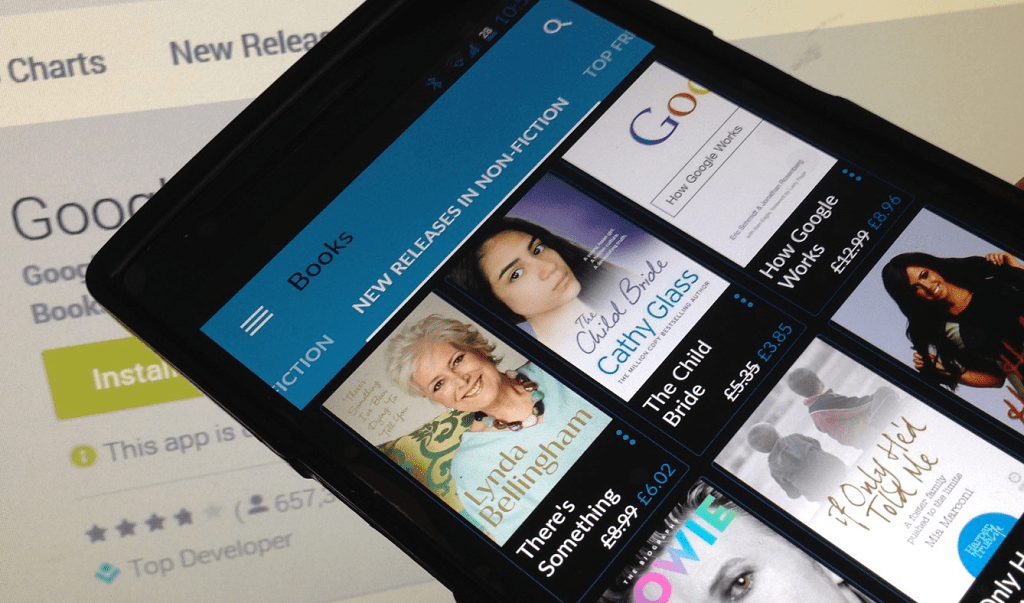
Google Play Books
Since most Android devices come with this app preinstalled, most book lovers are going to naturally find Google Play Books to be their favorite app. A strong competitor to Amazon Kindle, Google Play Books has the gameplan of making ebooks easily accessible on Android devices while offering seamless connectivity across all platforms. With a catalog that comprises of sci-fi stories, biographies, comics, mystery novels, and so much more, there’s a serious social element to it as well.
A library with millions of ebooks to choose from, there is a plentiful resource of free ebooks online on Google Play Books. With the Read Discover feature that offers news and stories, personalized recommendations, and a comprehensive ebook reader with Night Mode, personalization, annotations, and more, you’re sure to get more than your money’s worth from this gem by Google.
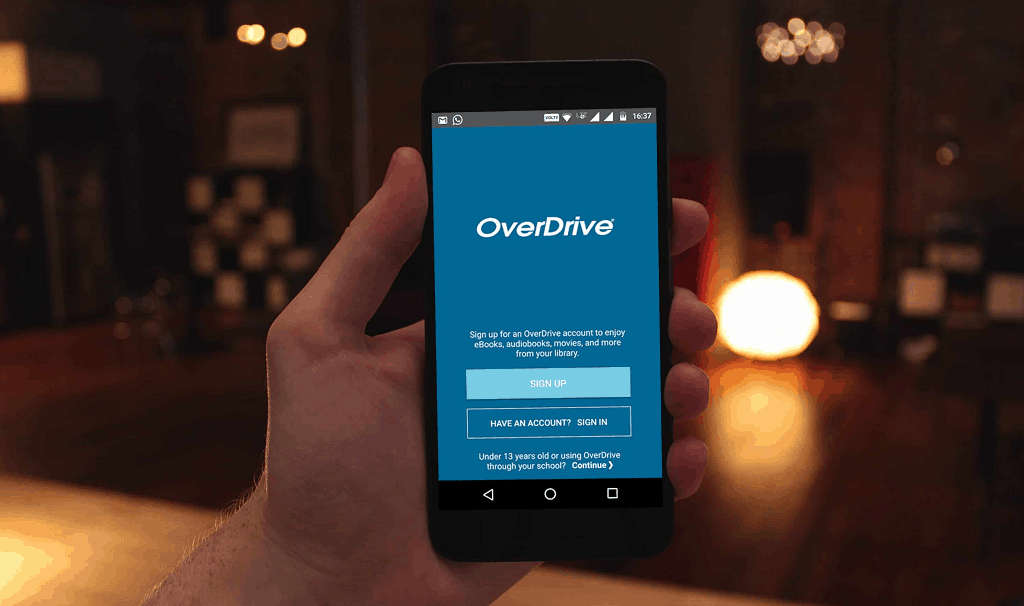
OverDrive
Remember the good old days when you could lend your favorite copy of Stephen King books and return them, just to set off on a new adventure. Overdrive brings back the concept of lending books rather than selling them, based on a virtual platform with the collection of books from more than 30,000 libraries all across the world (millions and millions of books!).
Unlike your city library, OverDrive is open 24/7 right on your Android device with a built-in ebook reader for syncing libraries, adding bookmarks, and creating wish lists as well. With a massive collection of audiobooks as well, you can even contact the listed libraries and suggest some of the authors you’d like them to stock up on.
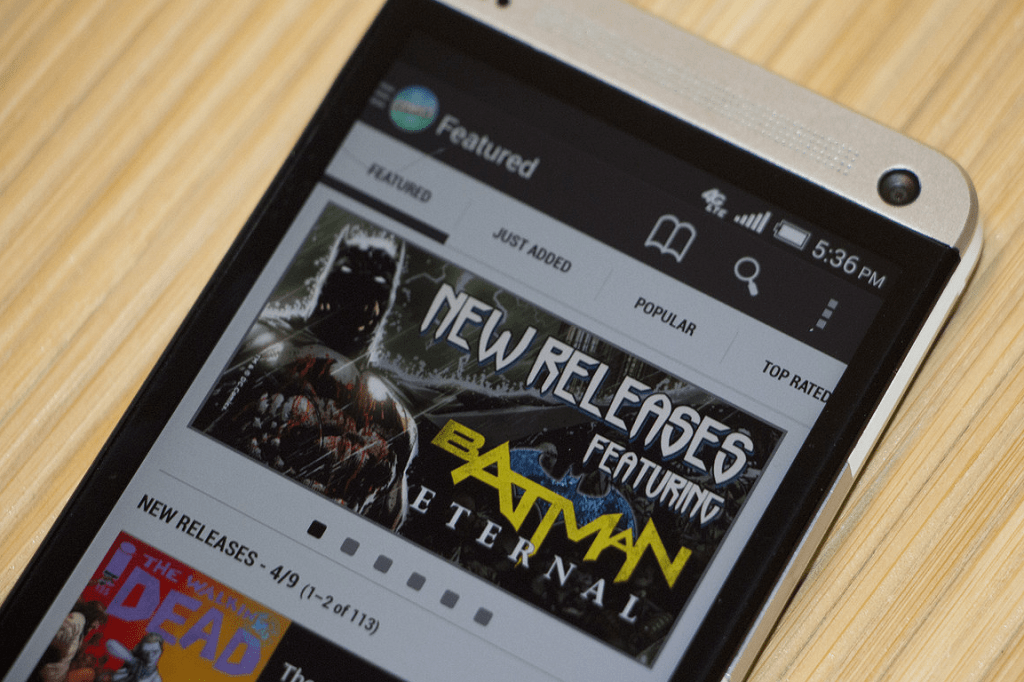
Comics
Not all of us are serious readers who like their written artwork to be intellectual and full of wordplay. If you are a die-hard comic book fan who needs a handheld ebook app that opens the world of millions of sci-fi comics packed with your favorite superheroes, Comics is the one to go for. With the ability to sync your Google and Amazon account, you can even add comic books to this app that you have already paid for.
Filled with hundreds and thousands of comics from publishers like DC Comics, Marvel, Archie Comics, Zenescope Entertainment and tons more, this app is a virtual paradise for comic nerds. Admittedly most of the premium series at available only at a subscription or purchase, they are fairly cheaper being electronic copies, which is perfect for collectors and hardcore enthusiasts.
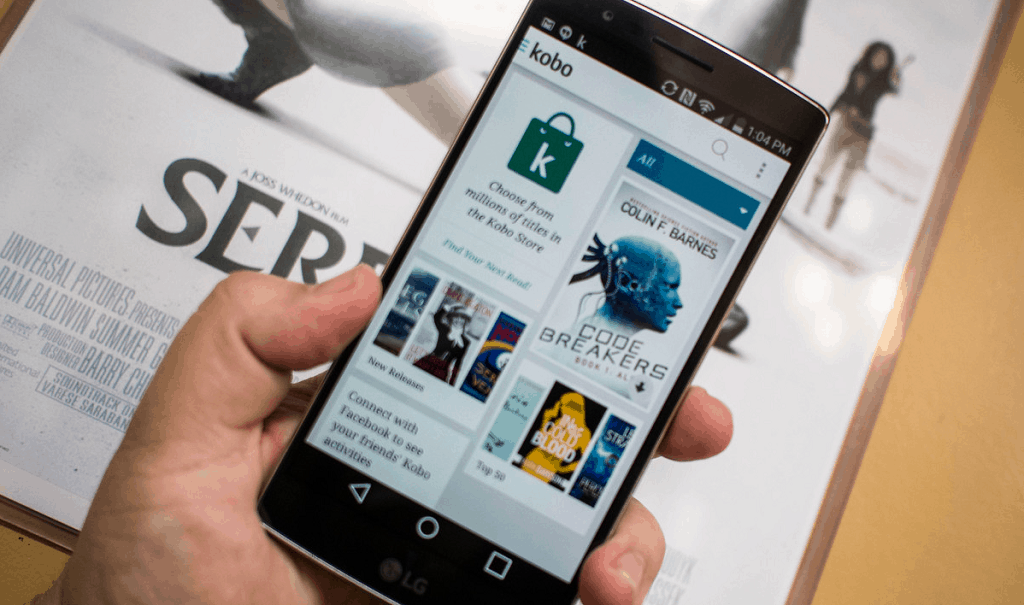
Kobo Books – Reading App
Another excellent choice to get free ebooks online, Kobo books possesses a massive library of written literature from all genres and authors. You can get most of the popular names on Kobo at a reasonable price, and as you make your private library, the app learns your likes and taste and recommends you the same.
The first time you sign up with Kobo Books, you get a $5 credit coupon to use on the store to purchase one or multiple books of your liking. With interactive features that show you how much time you have spent reading and all the pages you have read though, it’s the little things that make reading even more rewarding with Kobo Books.
Concluding it
There’s no doubt about the fact that there’s a special charm that comes with a physical book printed on actual paper. While a book may never need recharging and won’t break when it has a tumble, ebook readers are the future and you can only back onto the past so much.
By the time that future becomes a necessity, you can implement the technology you already have at hand to pleasure your reading senses. From creating your ebook library from scratch and collecting the best comic books available, to tweaking the device to your reading comfort and getting free ebooks online by dozens, there is an entire universe of possibilities that you can look into with an Android phone or tablet as an ebook reader.
Το Αμερικανικό Ναυτικό ανακοίνωσε ότι πρόκειται να διαθέσει στο προσωπικό που υπηρετεί στα πυρηνοκίνητα υποβρύχια, νέους e-reader που θα καλύπτουν τις αναγνωστικές ανάγκες των πληρωμάτων.
Πιο αναλυτικά, η ανακοίνωση του προγράμματος Navy e-Reader Device ή απλά NeRD έγινε από το Πρόγραμμα Γενικής Βιβλιοθήκης του Ναυτικού και αφορά ένα E Ink tablet το οποίο θυμίζει αρκετά το Kindle. Η διαφορά έγκειται στο γεγονός ότι το NeRD δεν θα έχει τη δυνατότητα σύνδεσης στο Διαδίκτυο, δεν θα έχει δυνατότητα προσθήκης αφαιρούμενων μέσων αποθήκευσης και δεν θα μπορεί κάποιος να προσθέσει ή να διαγράψει περιεχόμενο από αυτό.
Ο λόγος ύπαρξης του σχετικού προγράμματος έχει να κάνει με την ασφάλεια των υποβρυχίων που χρησιμοποιούν πυρηνική ενέργεια. Πιο συγκεκριμένα, στα συγκεκριμένα σκάφη δεν επιτρέπεται η χρήση οποιασδήποτε ταμπλέτας από το φόβο ότι θα μπορούσαν να υποκλαπούν δεδομένα που θα πρόδιδαν τη θέση του υποβρυχίου, όταν αυτό βρίσκεται στην επιφάνεια.
Έτσι εάν ένα μέλος του πληρώματος θέλει να διαβάσει, θα πρέπει να πάει στη βιβλιοθήκη του σκάφους, η οποία λόγω έλλειψης χώρου, είναι σημαντικά περιορισμένη σε ότι αφορά τους διαθέσιμους τίτλους.
Το Πρόγραμμα Γενικής Βιβλιοθήκης του Αμερικανικού Ναυτικού διαθέτει ήδη μία εκτεταμένη συλλογή από 108.000 e-books και audio-books, τα οποία είναι διαθέσιμα online για το προσωπικό και τις οικογένειές τους. Οπότε, όταν τέθηκε το αίτημα να υπάρχει πρόσβαση και από τα πλοία του στόλου, όπως τα υποβρύχια, η λύση δόθηκε με τη μορφή του NeRD.
Το Ναυτικό θα διαθέσει σε πρώτη φάση 365 συσκευές, οι οποίες αναλογούν σε πέντε συσκευές ανά υποβρύχιο. Κάθε συσκευή θα διαθέτει ήδη εγκατεστημένους 300 τίτλους βιβλίων οι οποίοι δεν θα μπορούν να αλλαχθούν. Οι τίτλοι που έχουν επιλεγεί καλύπτουν μια ευρεία γκάμα θεμάτων από αστυνομικά και κατασκοπευτικά μυθιστορήματα μέχρι έργα ναυτικής ιστορίας και έργα κλασσικών συγγραφέων.
Paper books were supposed to be dead by now. For years, information theorists, marketers, and early adopters have told us their demise was imminent. Ikea even redesigned a bookshelf to hold something other than books. Yet in a world of screen ubiquity, many people still prefer to do their serious reading on paper.
Count me among them. When I need to read deeply—when I want to lose myself in a story or an intellectual journey, when focus and comprehension are paramount—I still turn to paper. Something just feels fundamentally richer about reading on it. And researchers are starting to think there’s something to this feeling.
To those who see dead tree editions as successors to scrolls and clay tablets in history’s remainder bin, this might seem like literary Luddism. But I e-read often: when I need to copy text for research or don’t want to carry a small library with me. There’s something especially delicious about late-night sci-fi by the light of a Kindle Paperwhite.
What I’ve read on screen seems slippery, though. When I later recall it, the text is slightly translucent in my mind’s eye. It’s as if my brain better absorbs what’s presented on paper. Pixels just don’t seem to stick. And often I’ve found myself wondering, why might that be?
The usual explanation is that internet devices foster distraction, or that my late-thirty-something brain isn’t that of a true digital native, accustomed to screens since infancy. But I have the same feeling when I am reading a screen that’s not connected to the internet and Twitter or online Boggle can’t get in the way. And research finds that kids these days consistently prefer their textbooks in print rather than pixels. Whatever the answer, it’s not just about habit.
Another explanation, expressed in a recent Washington Post article on the decline of deep reading, blames a sweeping change in our lifestyles: We’re all so multitasked and attention-fragmented that our brains are losing the ability to focus on long, linear texts. I certainly feel this way, but if I don’t read deeply as often or easily as I used to, it does still happen. It just doesn’t happen on screen, and not even on devices designed specifically for that experience.
Maybe it’s time to start thinking of paper and screens another way: not as an old technology and its inevitable replacement, but as different and complementary interfaces, each stimulating particular modes of thinking. Maybe paper is a technology uniquely suited for imbibing novels and essays and complex narratives, just as screens are for browsing and scanning.
“Reading is human-technology interaction,” says literacy professor Anne Mangen of Norway’s University of Stavenger. “Perhaps the tactility and physical permanence of paper yields a different cognitive and emotional experience.” This is especially true, she says, for “reading that can’t be done in snippets, scanning here and there, but requires sustained attention.”
***
Mangen is among a small group of researchers who study how people read on different media. It’s a field that goes back several decades, but yields no easy conclusions. People tended to read slowly and somewhat inaccurately on early screens. The technology, particularly e-paper, has improved dramatically, to the point where speed and accuracy aren’t now problems, but deeper issues of memory and comprehension are not yet well-characterized.
Complicating the scientific story further, there are many types of reading. Most experiments involve short passages read by students in an academic setting, and for this sort of reading, some studies have found no obvious differences between screens and paper. Those don’t necessarily capture the dynamics of deep reading, though, and nobody’s yet run the sort of experiment, involving thousands of readers in real-world conditions who are tracked for years on a battery of cognitive and psychological measures, that might fully illuminate the matter.
Wästlund followed up that study with one designed to investigate screen reading dynamics in more detail. He presented students with a variety of on-screen document formats. The most influential factor, he found, was whether they could see pages in their entirety. When they had to scroll, their performance suffered.
According to Wästlund, scrolling had two impacts, the most basic being distraction. Even the slight effort required to drag a mouse or swipe a finger requires a small but significant investment of attention, one that’s higher than flipping a page. Text flowing up and down a page also disrupts a reader’s visual attention, forcing eyes to search for a new starting point and re-focus.
'Those dead trees still have a lot of life in them. '
Scrolling “took a lot of mental resources that could have been spent comprehending the text instead,” said Wästlund. Like being distracted when memorizing a phone number, scrolling’s interruptions knocked information from short-term memory. That’s the basic level of information processing, laying a foundation for long-term memories and knowledge.
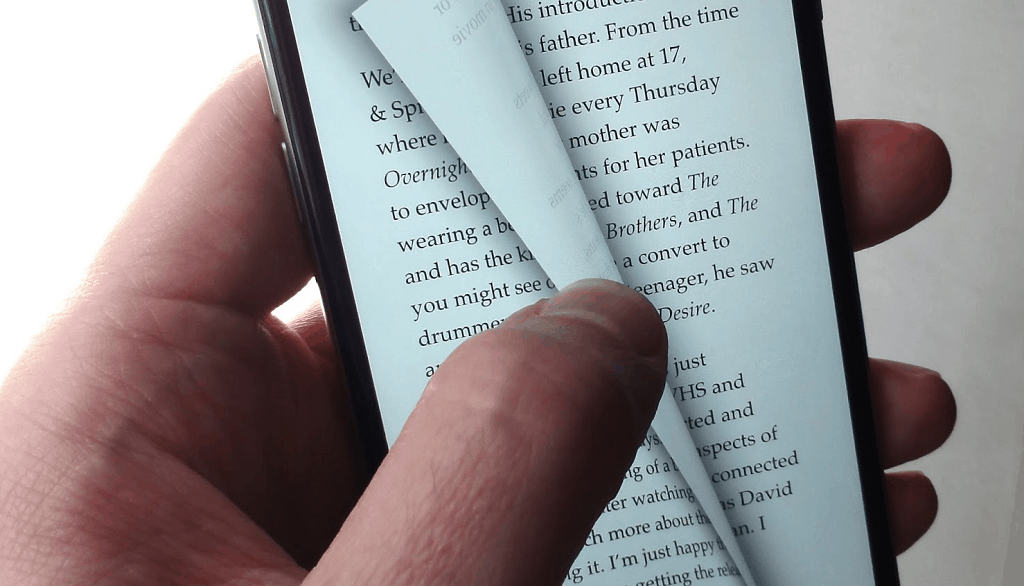
To be sure, electronic reading has changed quite a bit since Wästlund’s experiments, which concluded in 2005. Many applications, such as Amazon’s Kindle software, have scrapped scrolling in favor of page-flipping emulations. Yet Mangen, who in a 2013 study of Norwegian teens found a deeper comprehension of texts on paper, and Wästlund say that e-readers may fail to capture a crucial, generally overlooked aspect of paper books: their physicality.
From this perspective, the feel of pages under one’s fingertips isn’t simply old-fashioned charm. It’s a rich source of information, subconsciously informing readers of their position in a text. Reading experts say that sense of position is important: It provides a sort of conceptual scaffold on which information and memory is automatically arranged, and the scaffold is strongest when built from both visual and tactile cues.
“All those cues like what the page looks like, what the book felt like, all those little pieces help you put together the whole thing,” said Marilyn Jager-Adams, a cognitive psychologist and literacy expert at Brown University. “And they are just impoverished on a Kindle or tablet”—though these devices can be improved.
Photo: Ariel Zambelich/WIRED
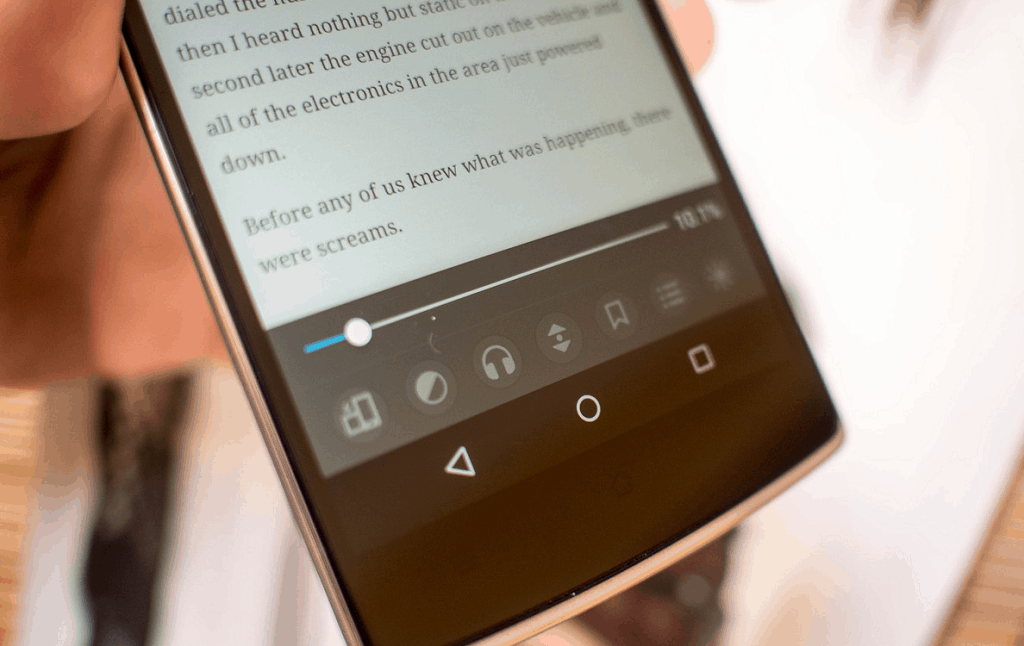
Electronic interfaces do feature symbolic progress bars or percentage-remaining figures, but these are purely visual stimuli, rather than tactile. Pages also tend to be displayed individually rather than in pairs, further limiting spatial representation. And in a sense, e-readers and tablets really just consist of a single page that’s constantly being re-written. That immateriality could register differently than fixed texts.
Paper books also allow for different types of annotation: underlining and dog-earing and margin-scribbling, which for many people is integral to deep reading. Screen-reading software may allow annotations, but the process is far less tactile—and some researchers say tactility may be important. Studies have shown that close links exist between gesture and cognition. These links are little-studied in the context of reading, but are very much a part of writing, which similarly involves constructing mental models of text.
“Especially for those of us with lots of traditional book exposure, we use physical pages as anchors for deep comprehension,” said cognitive scientist Judith Thomson of Sheffield University. Thomson describes reading comprehension as having several levels: individual words and sentences, which should be equivalent on screen and paper, and ultimately the larger narrative structure they build.
Keeping that structure in mind allows for richer comprehension, weaving themes and threads of thoughts into insight, and for some people, this may be easier with paper. “E-paper takes away this comprehension prop to some degree,” Thomson said, “which I think could have subtle impacts for many people, at least until their reading system learns to adapt.”
Jager-Adams agrees: “I think until they solve those problems, there are a number of people who will find that reading longer, more complex texts is difficult on a Kindle or tablet.”
When reading on paper, Ackerman’s students seemed to have a better sense of their own understanding. When reading on screen, they thought they absorbed information readily, but tests showed otherwise. Screens seemed to foster overconfidence. With practice, this could be corrected, said Ackerman, but “the natural learning process on paper is more thorough than on screen.”
Ackerman also noted, however, that preference played an important role. When students preferred screen reading, they learned less when required to read from paper, and vice versa.
Much of this research jibes with my own experience, but the science is far from settled. A study by psychologist Sara Margolin of Brockport University found no difference in reading comprehension in students reading paper, computer screens and e-readers. “It’s really a matter of personal preference,” said Margolin.
Another study of students using paper and electronic textbooks found no significant differences—and for some readers, such as those with dyslexia who find it easier to concentrate on small sections of text, Thomson found that e-readers may already be superior to paper books. “I think as we have more and more ways to present digital text, we will see more of these ‘interactions’ where for one group of readers, we see an advantage, and for others we see the opposite,” said Thomson.
Many questions remain. If reading shorter texts on screen or paper is indeed a matter of preference, does the same hold for deep reading? Can interface designers find better workarounds for the physical limitations of screens? Will people eventually adapt, with screen-trained readers finding new ways of creating structures in the absence of tactile cues?
Jager-Adams thinks it’s possible that deep reading, at least for many people, may eventually prove to be intertwined with the physical form of paper books. If that’s true, it’s all the more reason to appreciate them.
“We should be wary of saying, ‘That’s the way we’re going to read in the future anyways, so why resist?’” said Mangen. “There is something to deep reading and deep thinking that is worth making an effort to preserve.” Whether we need paper to do that remains to be seen. For now, though, there’s still plenty of life in those dead trees
Digital publishing is rapidly becoming a haven for struggling writers—but it turns out the format might hold similar potential for struggling readers too.
A new survey by UK charity Quick Reads indicates that adult readers tend to read more and stick with books longer if they’re using an e-reader. According to the survey, 48 percent of UK adults who use e-readers say the technology gets them to read more. In addition to that, 41 percent of respondents reported that being able to look up words they don’t know makes reading easier, and over half say that being able to change the size and appearance of text helps as well. The survey also found that 62 percent of e-reader users say that access to free digital books has led them to titles they otherwise wouldn’t have picked up. That’s an important finding for Quick Reads, which since 2006 has produced free ebooks for less confident adult readers. And Quick Reads’ approach doesn’t stop at availability: They also commission books from bestselling authors like Barbara Taylor Bradford and James Patterson. Their lineup includes fiction and nonfiction across a range of genres, as well as two licensed Doctor Who novels—all tailored to beginning and intermediate reading levels. It’s a notable break from the limited fare available to most who struggle with reading and often find themselves learning from children’s books or what the Guardian describes as “patronizing pamphlets.” But don’t expect to see Quick Reads’ ebooks supplant their print program. Literacy correlates closely with income, and therefore also with access to technology—as much now as three years ago, when author Seanan McGuire’s impassioned argument for the persistence of print, “Across the Digital Divide,” went viral. And print books, which Quick Reads’ prices at a reasonably affordable £1 (about $1.66 U.S.), are critical for expanding access to the many households without e-readers and regular internet access. So even though a nice Kindle might not help every struggling adult reader, it could help some burgeoning bookworms stick with the habit.
Τα τελευταία χρόνια, οι ηλεκτρονικές συσκευές ανάγνωσης ή αλλιώς e-readers έχουν γίνει εξαιρετικά δημοφιλείς. Βέβαια, δεν θα μπούμε σε καμία διαδικασία να τις συγκρίνουμε με το παραδοσιακό βιβλίο, αν και η παρουσία τους και μόνο έχει ξεσηκώσει την επιστημονική κοινότητα ώστε να μελετήσει τις επιδράσεις τους πάνω στον άνθρωπο.
Μέχρι τώρα είχαμε λάβει κάποια αρνητικά αποτελέσματα, όπως για παράδειγμα το γεγονός ότι χρήστες που χρησιμοποιούν πριν τον ύπνο συσκευές με LCD οθόνες μπορεί να οδηγηθούν στην αϋπνία (σε αντίθεση με συσκευές που έχουν τεχνολογία e-ink). Η τελευταία μελέτη όμως από τους ερευνητές του Smithsonian, παρουσιάζει σημαντικά θετικά ευρήματα.
Συγκεκριμένα, η επιστημονική ομάδα ανακάλυψε ότι οι ηλεκτρονικοί αναγνώστες βοηθούν τους πάσχοντες από δυσλεξία, να διαβάσουν πιο εύκολα. Ένα από τα βασικά προβλήματα των δυσλεκτικών ατόμων είναι η έλλειψη συγκέντρωσης στην ανάγνωση λόγω των πολλαπλών οπτικών ερεθισμάτων. Μια άλλη δυσλειτουργία είναι η «οπτική υπερφόρτωση», η ανικανότητα, δηλαδή, του πάσχοντα να αναγνωρίσει τα γράμματα όταν είναι πυκνά γραμμένα μέσα σσε ένα κείμενο.
Και στις δυο αυτές περιπτώσεις τα e-readers έκαναν την διαφορά καθώς μπορούσαν να προβάλλουν πολύ λίγες λέξεις ανά σελίδα και με μεγάλο διάκενο ανάμεσα στα γράμματα.
Συμφώνα με τον υπεύθυνο της έρευνας Dr. Matthew H. Schneps, η μέθοδος είχε αποτελέσματα σχεδόν σε όλους τους ασθενείς με τις συγκεκριμένες αδυναμίες, δηλαδή στο 1/3 του συνόλου των δυσλεκτικών ατόμων που εξετάστηκαν.
Η τεχνολογία μπορεί να μην αποτελεί πανάκεια, αλλά, για άλλη μια φορά, αποδεικνύει ότι όταν χρησιμοποιείται σωστά μπορεί να δώσει ευεργετικές λύσεις.
Πολλά εκατομμύρια χρήστες παγκοσμίως είναι κάτοχοι ενός Kindle e-book reader από την Amazon, μέσω του οποίου επιλέγουν να διαβάσουν τα αγαπημένα τους βιβλία, μεταξύ άλλων. Και έχουν περάσει ήδη 3 χρόνια από τότε που οι πωλήσεις e-books της Amazon ξεπέρασαν αυτές των «φυσικών» βιβλίων, στις ΗΠΑ. Πολύ νερό έχει κυλήσει στο αυλάκι, το κοινό έχει εξοικειωθεί με τα e-book readers και η αγορά και ανάγνωση βιβλίων από το κατάστημα της Amazon έχει γίνει καθημερινή ρουτίνα για αρκετούς.
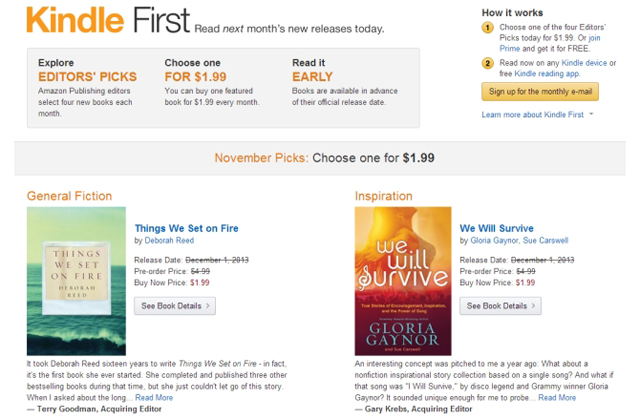
Οι φανατικοί αναγνώστες είναι συνήθως συνδρομητές του Amazon Prime, ώστε να απολαμβάνουν διάφορα προνόμια σε σχέση με τους «απλούς» χρήστες. Από εχθές, λοιπόν, όσοι ανήκουν στο Prime, θα έχουν ακόμη ένα λόγο να πληρώνουν για την υπηρεσία: Ονόματι “Kindle First”, το νέο πρόγραμμα θα προσφέρει σε κάθε χρήστη, κάθε μήνα, ένα νέο e-book προτού αυτό κυκλοφορήσει στα καταστήματα! Και το καλύτερο όλων; Θα είναι δωρεάν!
Ακριβώς αυτό σκέφτηκαν και υλοποίησαν οι άνθρωποι της Amazon για να ανταμοίψουν τους πιστούς χρήστες της και να προσφέρουν επιπλέον κίνητρα για όσουν δεν έχουν γίνει ακόμη συνδρομητές. Για αρχή, προσφέρονται τα "Things We Set on Fire" της Deborah Reed; "No Place for a Dame" της Connie Brockway; "Silent Echo" του J.R. Rain και το "We Will Survive: True Stories of Encouragement, Inspiration, and the Power of Song" της διάσημης τραγουδίστριας Gloria Gaynor. Τα βιβλία αυτά θα κυκλοφορήσουν το Δεκέμβρη αλλά ήδη από εχθές είναι διαθέσιμα στους χρήστες του Prime και μάλιστα χωρίς χρηματικό αντίτιμο.
Αυτό θα επαναλαμβάνεται κάθε μήνα για νέες κυκλοφορίες, ενώ οι χρήστες θα δέχονται ένα ενημερωτικό e-mail με όλες τις διαθέσιμες επιλογές. Άλλα πλεονεκτήματα του Prime περιλαμβάνουν δωρεάν μεταφορικά σε κάθε παραγγελία τους και περισσότερες από 40.000 ταινίες και τηλεοπτικά σόου με την ετήσια συνδρομή των 79$. Σίγουρα το Kindle First θα προσελκύσει ακόμα περισσότερους στην αγκαλιά της Amazon που δρέπει τους καρπούς των επενδύσεών της στο Kindle brand.
Ανοιχτή συζήτηση για το κατά πόσον τα ηλεκτρονικά βιβλιοπωλεία συμβάλλουν στο κλείσιμο των συμβατικών.
Της Χριστινας Σανουδου
Εχουν περάσει ήδη δύο χρόνια από τότε που το Amazon ανακοίνωσε πως πουλάει περισσότερα βιβλία σε ηλεκτρονική απ’ ό,τι σε συμβατική μορφή. Εντούτοις, παρά τη δημοτικότητα των e-books και συσκευών όπως το i-pad, φαίνεται πως οι περισσότεροι βιβλιόφιλοι εξακολουθούν να αντλούν μεγαλύτερη ευχαρίστηση από το ξεφύλλισμα ενός χάρτινου τόμου. Είναι δύσκολο να φανταστούμε έναν κόσμο, όπου τα παιδιά θα μεγαλώνουν χωρίς ποτέ να αγγίξουν ή να μυρίσουν ένα βιβλίο, στερημένα από τη μαγεία της τυχαίας ανακάλυψης, που προσφέρει σε έναν αναγνώστη η περιήγηση ανάμεσα στα ράφια ενός βιβλιοπωλείου ή μιας δημόσιας βιβλιοθήκης - εν αντιθέσει με τις «προτάσεις» των ηλεκτρονικών βιβλιοπωλείων, βασισμένες αποκλειστικά σε στατιστικά στοιχεία και την καταγραφή της αγοραστικής συμπεριφοράς κάθε χρήστη. Οι απαισιόδοξοι προβλέπουν το τέλος της λογοτεχνίας, γεγονός που υποστηρίζεται και από τη μείωση του αναγνωστικού κοινού, τουλάχιστον στην Ευρώπη και την Αμερική. Οι αισιόδοξοι επιμένουν πως η παγκόσμια βιβλιοπαραγωγή αυξάνεται με ταχύτερους ρυθμούς από ποτέ άλλοτε, ανεξάρτητα από το αν οι διαθέσιμοι τίτλοι περνούν ή όχι από το τυπογραφείο.
Η τεχνολογία
Για πόσα χρόνια ακόμα θα συνεχίσει να υπάρχει το βιβλίο, όπως το ξέρουμε; Σχετίζεται η οικονομική κρίση με τα χαμηλό ποσοστό συστηματικών αναγνωστών στην Ελλάδα, όπου, σύμφωνα με τις πιο πρόσφατες έρευνες, το 40% του πληθυσμού δεν διαβάζει ούτε ένα βιβλίο τον χρόνο; Κατά πόσο έχουν συμβάλει τα ηλεκτρονικά βιβλιοπωλεία στο κλείσιμο πολυάριθμων συμβατικών βιβλιοπωλείων τα τελευταία χρόνια; Πώς είναι δυνατόν να καλλιεργηθεί η φιλαναγνωσία στις νεότερες γενιές; Αυτά και άλλα ερωτήματα απασχόλησαν τους συμμετέχοντες στην ανοιχτή συζήτηση με θέμα «Από την Ιλιάδα στο iPad: Το μέλλον του βιβλίου και των αναγνωστών», που διοργανώθηκε τον μήνα που μας πέρασε από την Ελληνοαμερικανική Ενωση και το λονδρέζικο Institute of Ideas. Με αφορμή το κλείσιμο του βιβλιοπωλείου της Εστίας, τη διάδοση των ηλεκτρονικών βιβλίων και την αυξανόμενη αγοραστική δύναμη του Amazon, ο Μανώλης Ανδριωτάκης, δημοσιογράφος και συνιδρυτής της video πλατφόρμας Garage TV, η Αρετή Γεωργιλή, ιδιοκτήτρια του βιβλιοπωλείου Free Thinking Zone, ο Βαγγέλης Δαβιτίδης, ιδρυτής του περιοδικού «Υποβρύχιο», η Βρετανίδα κοινωνιολόγος και πολιτιστική αναλύτρια Tiffany Jenkins και ο συγγραφέας Αλέξης Σταμάτης κλήθηκαν να αναπτύξουν τις απόψεις τους και να διαφωνήσουν εποικοδομητικά, με την ενεργή συμμετοχή του κοινού.
Τον ρόλο της συντονίστριας είχε η Claire Fox, ιδρύτρια και διευθύντρια του Institute of Ideas, μια πρωτοβουλία για την προώθηση της ελεύθερης σκέψης και την ανταλλαγή ιδεών με έδρα το Λονδίνο, συγγραφέας και συμμετέχουσα στην εβδομαδιαία ραδιοφωνική εκπομπή του BBC4 «Moral Maze». Η «Κ» την συνάντησε στο περιθώριο της συνάντησης αυτής και είχε μια σύντομη συνομιλία μαζί της.
Η μείωση των συστηματικών αναγνωστών είχε αρχίσει να συντελείται πριν από την έλευση των συσκευών ηλεκτρονικής ανάγνωσης, είναι η θέση της κ. Fox, η οποία προειδοποιεί ενάντια στη «φετιχοποίηση της τεχνολογίας» και εκτιμά πως η αιτία του προβλήματος έγκειται στην απουσία του κατάλληλου «κλίματος» για την καλλιέργεια της φιλαναγνωσίας. Μολονότι «σχεδόν κάθε πόλη της Βρετανίας πλέον έχει το δικό της λογοτεχνικό φεστιβάλ», οι προσκεκλημένοι επιλέγονται συχνότερα με κριτήριο την ικανότητά τους «να κάνουν δημόσιες σχέσεις» ή να ψυχαγωγούν το κοινό με τις πνευματώδεις ομιλίες τους. Και ενώ οι επίσημες εκδηλώσεις, οι συζητήσεις και οι παρουσιάσεις αυξάνονται, ξεχνάμε πώς «να αφοσιωνόμαστε ήσυχα σε ένα βιβλίο», συνεχίζει.
Παράλληλα, «πολλές από τις εκστρατείες για το βιβλίο δίνουν έμφαση στη χρησιμότητά του. Δεν μπορείς να αγαπήσεις το διάβασμα επειδή είναι χρήσιμο, ούτε επειδή στο επιβάλλουν». Ωστόσο, την ευθύνη για τη διαμόρφωση μιας κουλτούρας φιλαναγνωσίας δεν έχει το κράτος, αλλά τα σχολεία, τα πανεπιστήμια και όλοι οι αναγνώστες, που μπορούν να επηρεάσουν τους γύρω τους, απλώς προτείνοντάς τους ένα καλό βιβλίο. Ουσιαστικά, αυτό που χρειάζεται είναι «να αρχίσουμε ξανά να πιστεύουμε στη δύναμη των βιβλίων, να συζητάμε γι’ αυτά και να μη διστάζουμε να μοιραστούμε το πάθος μας», αναφέρει η διευθύντρια του Institute of Ideas. Τέλος, σημαντικό ρόλο μπορούν να διαδραματίσουν «οι σοβαροί βιβλιοκριτικοί, που στις μέρες μας σπανίζουν».
Συγκεκριμένα είδη
Την άποψη πως «η παιδεία δεν ξεκινά από την εθνική πολιτική για το βιβλίο» συμμερίζεται η κ. Αρετή Γεωργιλή, ιδιοκτήτρια του βιβλιοπωλείου Free Thinking Zone, που, στο πλαίσιο των δράσεών του για τη διάδοση της φιλαναγνωσίας και την ενίσχυση του κοινωνικού διαλόγου, συνεργάζεται και με το Institute of Ideas. Οπως μας υπενθύμισε σε μια κουβέντα που είχαμε μαζί της μετά το πάνελ, στην Ελλάδα «ο κόσμος δεν διάβαζε και πριν από την κρίση». Η κ. Γεωργιλή αναφέρεται σε στοιχεία τα οποία δείχνουν πως η παρούσα συγκυρία έχει ως συνέπεια την αύξηση των πωλήσεων συγκεκριμένων ειδών βιβλίων, όπως τα δοκίμια - ενδεχομένως επειδή οι αναγνώστες «προσπαθούν να κατανοήσουν τι φταίει και αναζητούν πιθανές λύσεις».
Παρότι αναγνωρίζει πως ακόμα και οι συστηματικοί αναγνώστες στην Ελλάδα πλέον επενδύουν λιγότερα χρήματα στην αγορά βιβλίων, θεωρεί πως το βιβλίο δεν είναι σε καμία περίπτωση υπό εξαφάνιση και ανατρέχει στη φράση του Stephen Fry: «Τα βιβλία δεν απειλούνται από το Kindle περισσότερο από όσο οι σκάλες απειλούνται από τα ασανσέρ».
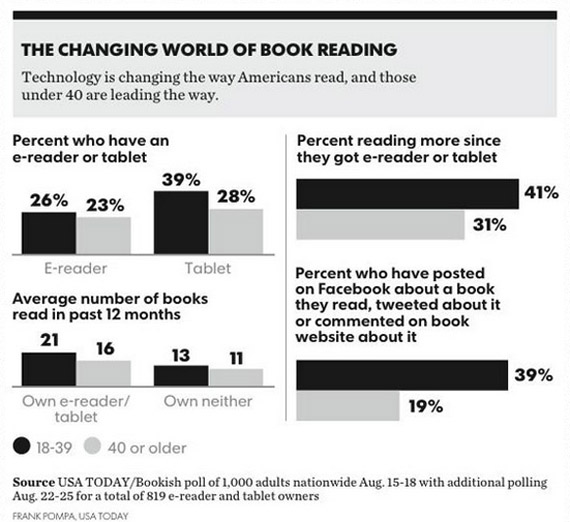
Πολλοί έχουν κατηγορήσει τα tablets και τα e-readers, ειδικά τα πρώτα, ότι έχουν κάνει τον κόσμο να απομακρυνθεί από τα βιβλία και το διάβασμα, αλλά μία ενδιαφέρουσα έρευνα στις ΗΠΑ έδειξε το ακριβώς αντίθετο. Οι ενήλικες που είχαν στην κατοχή τους ένα τέτοιο gadget έτειναν να ξοδεύουν περισσότερο χρόνο στο διάβασμα από εκείνους που δεν είχαν μια τέτοια συσκευή στο χέρι τους.
Ένα άλλο στοιχείο που έκανε την έρευνα ενδιαφέρουσα είναι το ότι εμφανίστηκαν διαφορετικές αναγνωστικές συνήθειες στους ενήλικες άνω των 40 ετών και σε εκείνους που ήταν κάτω των 40. Ένα άλλο ενδεικτικό στοιχείο είναι ότι η ίδια έρευνα ένα χρόνο πριν έδειξε ότι έχει σημειωθεί περίπου διπλάσια διείσδυση αυτών των συσκευών στο καταναλωτικό κοινό. Μήπως τελικά οι συσκευές μας, μας βοηθούν να μορφωθούμε λίγο περισσότερο;
Lots of visual space makes processing text easier for a subset of dyslexics.
Using an e-reader may help some dyslexic students understand what they read, researchers at Harvard University argue.
In a paper published in the journal PLOS One, the authors found that a group of dyslexic teenagers showed greater reading comprehension when using an iPod Touch e-reader than when asked to read from paper. The e-reader was formatted to display around nine lines of text on the screen at a time, with only two or three words in each line, leaving fewer visual distractions. The authors therefore concluded that this improvement is due to the reduced demands on visual attention when reading from the iPod.
The dominant theoretical explanation for dyslexia involves phonological processing, or understanding the sound structure of speech. But there is growing evidence that dyslexia is caused by multiple factors, which can include difficulties in visual attention. It seems that some, though not all, dyslexics have difficulties in processing detailed visual information.
In normal reading, there is a sensitive and highly efficient link between eye movement and understanding. People often believe that when we read, our eyes move continuously and gradually, but that is not the case. Reading involves a series of short eye "jumps" or saccades, followed by a brief period of stillness while the brain processes the letters in front of the eyes. The "visual span" is the number of letters that can be processed during the period of stillness, before moving one’s eyes again.
Problems in the text, such as typos or unknown words, prompt an almost immediate response, with eyes tracking backward and forward to check the surrounding context to help resolve the issue. This shows that we are interpreting what we read word by word, continually updating our understanding.
In skilled reading, this process is so automatic we hardly notice it. However, many dyslexic readers seem to have difficulties, including a shorter visual span and less efficient eye movements. The e-reader means that readers do not need to make these saccades in the same way, and their visual span is less crucial (since the lines of text are so short).
This study shows a significant interaction between visual span and method of reading. Using an iPod improves comprehension in those students with short visual spans, but it reduces comprehension in those with long or good visual spans. This very neatly shows that the visual abilities of the reader are crucial for determining whether this method will be beneficial or not. About a third of the students involved showed a better understanding of what they were reading when using an iPod.
These findings suggest that e-readers may be a useful tool for dyslexic students; however, as the authors state, they would only be an adjunct to direct teaching and practice in reading in multiple contexts. (They also tested adolescent students in a specialized school for children with language learning impairments, so it is not clear that the findings can be extrapolated to older or younger readers, or less severely impaired students.)
The study also has implications for our wider understanding of dyslexia. Historically, the evidence for the causal role of visual impairments in dyslexia has been mixed. Some researchers have argued that, because of the close link between cognition and eye movements, the less efficient eye movements of dyslexic students might be a reflection of their reading problems, rather than a cause.
However, the study shows this is not the full explanation. Simplifying the layout of text actually improves understanding in a third of these students, indicating that the eye movements themselves are making it harder for the dyslexic students to understand what they read.
Για πρώτη φορά τα tablet PCs θεωρούνται στις
ΗΠΑ οι προτιμώμενες συσκευές ανάγνωσης, αν και με μικρή διαφορά, σε σχέση με
τους ηλεκτρονικούς αναγνώστες, σύμφωνα με το πρώτο μέρος για το 2013 της έγκυρης
και επιδραστικής Consumer
Attitudes Toward E-Book Reading του Book Industry Study Group (BISG) που
υποστηρίζεται από τη Bowker Market Research.
To 44% των αναγνωστών ebooks προτιμούν σήμερα
τα tablet PCs από 37% τον Αύγουστο του 2012, ενώ οι ηλεκτρονικοί αναγνώστες
προτιμώνται από το 42% σήμερα έναντι 49% τον Αύγουστο. Η τάση αυτή αναμένεται να
συνεχιστεί καθώς η πρόθεση αγοράς ενός tablet PC παραμένει σταθερή στο 37%, ενώ
η αντίστοιχη πρόθεση για τους ηλεκτρονικούς αναγνώστες εμφανίζει κάμψη.
Εμφανής είναι πλέον η διαφοροποίηση στα είδη
των ebooks που διαβάζονται σε κάθε κατηγορία συσκευής. Η λογοτεχνία
συνεχίζει να κυριαρχεί στους ηλεκτρονικούς αναγνώστες ενώ για εξειδικευμένα,
μη-λογοτεχνικά βιβλία προτιμώνται άλλες συσκευές. Για παράδειγμα, αυτοί που
προτιμούν τους ηλεκτρονικούς αναγνώστες τείνουν να επιλέγουν λογοτεχνικά βιβλία
γενικού ενδιαφέροντος, μυστηρίου, λογοτεχνικά βιβλία υψηλής ποιότητας και
συναισθηματική λογοτεχνία, σύμφωνα με την έρευνα. Αντίθετα, οι εξειδικευμένοι
οδηγοί και τα εγχειρίδια είναι πιο δημοφιλή στους ηλεκτρονικούς υπολογιστές. Στα
κινητά τηλέφωνα τελευταίας γενιάς οι καταναλωτές προτιμούν να διαβάζουν
περισσότερο ταξιδιωτικούς οδηγούς απ' ό,τι στα tablet PC τους ή στους
ηλεκτρονικούς αναγνώστες.
Η έρευνα δείχνει επίσης συνεχή αύξηση στην
προτίμηση των ebooks σε σχέση με τα έντυπα βιβλία. Το 82% περίπου όσων αγοράζουν
ebooks συστηματικά (Power Buyers), όσων δηλαδή αγοράζουν ebooks σε εβδομαδιαία
βάση, προτιμούν τα e-books σε σχέση με τα έντυπα και σχεδόν το 70% των
μη-συστηματικών αγοραστών επίσης προτιμούν τα e-books σε σχέση με τα
έντυπα.
Τι σημαίνει
Τα δημοσιευμένα αποτελέσματα της έρευνας
επιβεβαιώνουν πως οι αναγνώστες προτιμούν μια σειρά από διαφορετικές συσκευές
για την ανάγνωση των ηλεκτρονικών τους βιβλίων.
Παρόλο που τα tablet PCs έχουν ξεπεράσει σε
προτιμήσεις τους ηλεκτρονικούς αναγνώστες, o αριθμός όσων προτιμούν τους
ηλεκτρονικούς αναγνώστες είναι ακόμα ιδιαίτερα υψηλός. Και στις δύο περιπτώσεις
πρόκειται για ένα ποσοστό άνω του 40%.
Η συνεχής άνοδος των tablet PCs ως συσκευών
ανάγνωσης θα σημάνει για τους κατασκευαστές ακόμα περισσότερη έμφαση σε αυτήν
την κατηγορία συσκευών. Όμως το μερίδιο των ηλεκτρονικών αναγνωστών είναι ακόμα
πολύ σημαντικό για να υποτιμηθεί.
Το πιο σημαντικό ίσως στοιχείο της έρευνας
είναι η διαφοροποίηση του είδους των βιβλίων που διαβάζονται σε κάθε κατηγορία
συσκευής.
Είναι σαφές πως όπου έχουμε να κάνουμε με
εκτενές συνεχές κείμενο, που διαβάζεται μάλιστα για ψυχαγωγία, οι αναγνώστες
προτιμούν τους ηλεκτρονικούς αναγνώστες.
Όπου έχουμε εγχειρίδια και γενικότερα διάβασμα
για δουλειά ή εκπαίδευση, τα laptop και τα desktop εξακολουθούν να έχουν
προβάδισμα - γιατί έχουν πιο ισχυρά και συνδυαστικά εργαλεία για σημειώσεις,
επεξεργασία κειμένου και παράλληλη αναζήτηση στο internet.
Το δημοσιευμένο κομμάτι της έρευνας δεν
αναφέρει ποιες κατηγορίες e-books διαβάζονται στα tablet PC. Όμως έμμεσα
προκύπτει πως πρόκειται για τις κατηγορίες βιβλίων που βασίζονται στο χρώμα, την
εικόνα, το βίντεο, τη διαδραστικότητα, όπως π.χ. τα παιδικά e-books. Από τέτοιου
είδους e-books μόνο για τους ταξιδιωτικούς οδηγούς προτιμώνται τα κινητά
τηλέφωνα - γιατί στους ταξιδιωτικούς οδηγούς μετράει η φορητότητα και η άμεση
πρόσβαση στην πληροφορία.
Κάτι που μας οδηγεί σε ένα γενικότερο
συμπέρασμα: δεν υπάρχει μία και μόνη συσκευή για να διαβάζονται ικανοποιητικά
όλα τα είδη ebooks.
ΚΡΗΤΗ: Στελέχωση με προσωπικό
-
Τη μετάταξη και των δύο εκπαιδευτικών σε οργανικές θέσεις του Ιστορικού
Αρχείου Κρήτης ζητά ο Σύλλογος “Φίλοι Ιστορικού Αρχείου Κρήτης” με επιστολή
προς τ...
Βραδιά λογοτεχνικών αναγνώσεων
-
Η Λέσχη Ανάγνωσης Βιβλιοτρόπιο στην τελευταία της συνάντηση πριν από τις
καλοκαιρινές διακοπές διοργάνωσε στο χώρο της τη Στέγη Γραμμάτων και Τεχνών
στη Λ...







 Αναρτήσεις